Artist · Czech
Alphonse Mucha: Life, Posters and Legacy
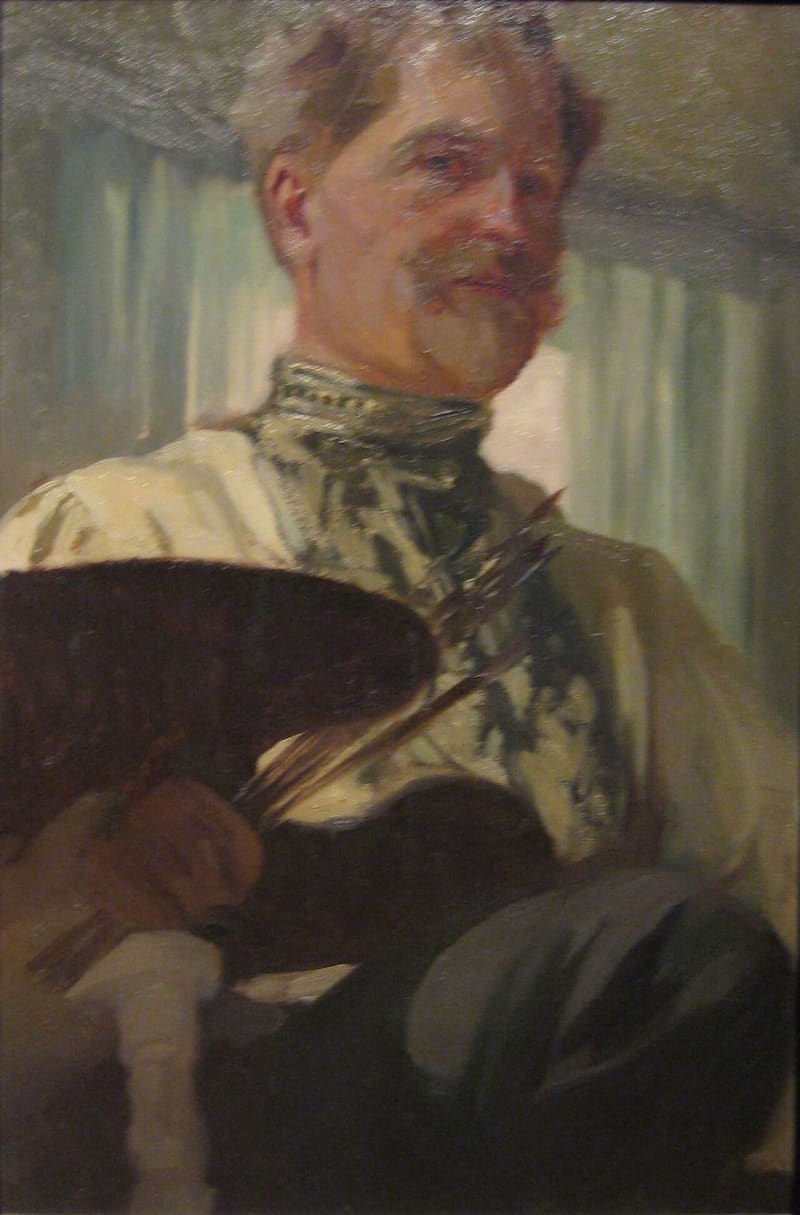
- Born
- July 24, 1860, Ivančice, Moravia (now Czech Republic)
- Died
- July 14, 1939, Prague, Czechoslovakia
- Nationality
- Czech
- Movement
- Art Nouveau
Early life
Alfons Maria Mucha was born on 24 July 1860 in Ivančice, a small town in Moravia, then part of the Austrian Empire. He sang in a church choir as a boy and drew constantly. After working as a scene painter for a theater design firm in Vienna, he found a patron, Count Karl Khuen-Belasi, who paid for him to study at the Munich Academy and then, from 1887, in Paris.
Overnight fame with Sarah Bernhardt
In Paris Mucha scraped a living illustrating books and magazines. His break came around Christmas 1894, when the actress Sarah Bernhardt, the greatest star of the day, needed a new poster for her play Gismonda in a hurry. Mucha’s design, a tall, narrow image of Bernhardt in a Byzantine costume and a halo of mosaic, went up on the walls of Paris on 1 January 1895 and caused a sensation; collectors bribed bill-posters or cut copies from the walls. Bernhardt signed him to a six-year contract, and he designed her posters, sets, costumes and even jewelry.
The “Mucha style”
For the rest of the 1890s Mucha’s work was everywhere: posters for cigarette papers, champagne, biscuits and bicycles; decorative panels such as The Seasons (1896); calendars, menus and book designs. His women, with their swirling hair, flowing robes and circular halos, framed by flowers and ornament, became so identified with the new style that in France Art Nouveau was often simply called “le style Mucha.” In 1902 he published Documents décoratifs, a handbook of designs for craftsmen.
The Slav Epic
Mucha always saw his commercial work as a means to an end. A fervent Czech patriot, he dreamed of painting the history of the Slavic peoples. With funding from the American businessman Charles Crane, whom he met on visits to the United States, he returned to Bohemia in 1910 and spent 16 years on The Slav Epic, 20 huge canvases, which he presented to the city of Prague in 1928. After Czechoslovakia became independent in 1918, he designed its first postage stamps and banknotes.
Death and legacy
When German troops occupied Czechoslovakia in March 1939, Mucha, aged 78, was among the first people arrested by the Gestapo. He died of pneumonia in Prague on 14 July 1939, shortly after his release. His work fell from fashion after the war but was rediscovered in the 1960s, when his posters inspired psychedelic poster designers, and it has stayed popular ever since, influencing illustrators, comic artists and graphic designers around the world.
Frequently asked questions
What is Alphonse Mucha famous for?
For his Art Nouveau posters and decorative panels of the 1890s, showing graceful women framed by flowing hair, flowers and ornate halos. His poster for Sarah Bernhardt in Gismonda (1895) made him famous overnight.
What is the Slav Epic?
A cycle of 20 enormous paintings on the history of the Slavic peoples, which Mucha worked on from 1910 to 1926 and gave to the city of Prague in 1928. Some canvases are about 6 × 8 meters.
How did Alphonse Mucha die?
He died in Prague on 14 July 1939, a few months after the German occupation of Czechoslovakia. As a prominent Czech patriot he was among the first people arrested and interrogated by the Gestapo, and he died of pneumonia soon after his release.